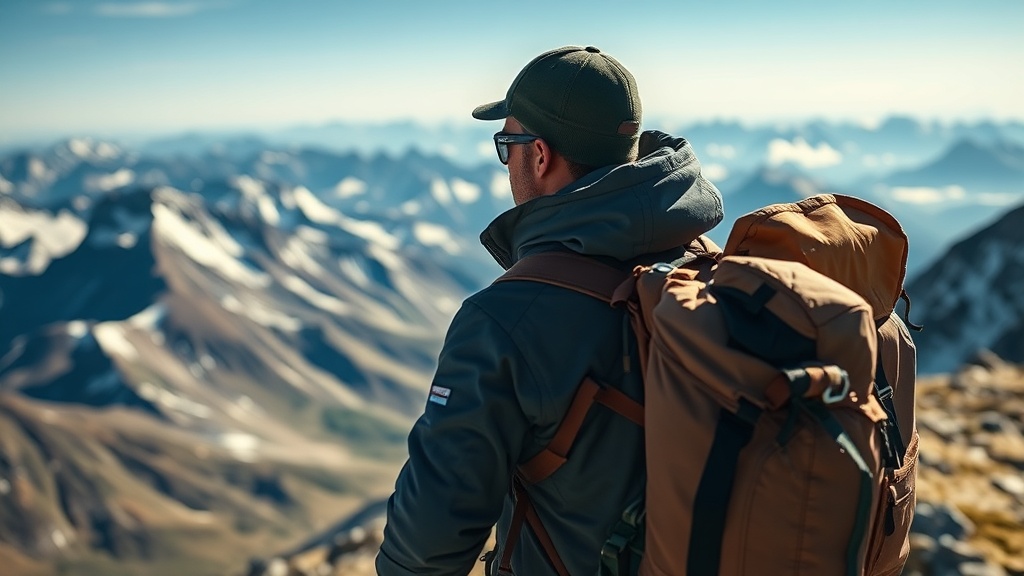
Navigating High Altitude Trail Maps with Confidence

According to the National Park Service, altitude sickness and getting lost due to poor orientation are among the most common reasons for emergency rescues in high-elevation wilderness areas. This post explains how to read topographic maps, understand contour intervals, and use GPS technology to ensure you don't end up off-course when the weather turns. We'll look at the differences between paper and digital tools and how to prepare for terrain changes.
What is a Topographic Map?
A topographic map is a specialized map that uses contour lines to show the shape and elevation of the land. Unlike a standard road map that focuses on paths and destinations, a topo map focuses on the verticality of the terrain. This is vital for high-altitude trekking because a two-mile stretch on a flat plane is vastly different from a two-mile stretch that involves a 2,000-foot vertical climb.
You'll see brown lines snaking across the page. These are contour lines. When they are packed tightly together, you're looking at a steep cliff or a sharp ridge. When they are far apart, the ground is relatively flat or gently sloping. It's a visual language that tells you exactly how much work your legs are about to do.
If you're planning a trip to the High Sierras, you'll want to study these lines before you even leave your house. A mistake in reading elevation can lead to a situation where you think you're heading toward a gentle meadow but are actually climbing a jagged peak. (And trust me, you don't want to be making that mistake when the sun starts setting.)
To understand the technical side of these maps, you can check out the technical specifications on Wikipedia regarding coordinate systems and projections.
How Do I Read Contour Lines?
You read contour lines by identifying the interval between them and tracking the elevation changes as you move across the map. Each line represents a specific height above sea level. If one line is labeled 10,000 and the next is 10,100, your contour interval is 100 feet.
Here are the three most common shapes you'll encounter:
- Concentric Circles: These represent a summit or a hill peak. The smallest circle in the center is the highest point.
- V-Shapes: These usually indicate a valley or a stream bed. If the "V" points upward, you're likely looking at a drainage area.
- Parallel Lines: These show a consistent slope. The closer the lines, the steeper the grade.
It's easy to get turned around if you aren't paying attention to the "grain" of the land. I once spent forty minutes trying to find a flat campsite only to realize I was looking at a series of steep, nested ridges. I thought I was on a plateau. I was actually on a series of steep bumps. It's a humbling experience.
When you're planning your route, don't just look at the distance. Look at the "climb." A route that looks short on a standard Google Map might be an absolute beast if the contour lines are bunched up like a crushed piece of paper. If you're worried about the physical toll of high-altitude hiking, read my thoughts on managing your fluid balance in thin air to stay healthy while climbing.
Which Map Tool Should I Use?
The best tool depends on your specific environment, but a combination of a physical paper map and a reliable GPS device is the safest bet. Digital tools are great for real-time tracking, but they can fail when batteries die or signal drops in deep canyons.
I've put together a quick comparison to help you decide which tool to prioritize for your next excursion:
| Feature | Paper Topo Map | GPS Device (Garmin/Smartphone) |
|---|---|---|
| Battery Life | Infinite (No power needed) | Limited (Requires charging) |
| Detail | High (Shows much more context) | Moderate (Often simplified) |
| Requires skill to read | Very intuitive/Automated | |
| Reliability | Doesn't break if dropped | Can fail due to signal or software |
If you use a smartphone for navigation, please don't rely on a standard cellular connection. High-altitude environments often have zero bars. Use an app like Gaia GPS or AllTrails with downloaded offline maps. If you're a minimalist, you might prefer Garmin's specialized handheld GPS units, which are built to withstand extreme weather and rugged environments.
A physical map is your insurance policy. If your phone falls into a creek or the battery hits 0% in the freezing cold, the paper map stays functional. It's a low-tech solution that works every single time.
How Do I Use a Compass with a Map?
You use a compass to orient your map to the actual terrain so that "North" on your paper matches "North" in the real world. This process is called orienting the map.
Follow these steps to get it right:
- Lay your map flat on a level surface.
- Place your compass on the map.
- Rotate the map and the compass together until the north-south lines on the map align with the magnetic needle of the compass.
- Check your bearings frequently to ensure you haven't drifted off course.
Don't assume the "North" on your phone's compass is perfectly accurate in deep valleys. Magnetic declination—the difference between true north and magnetic north—can throw you off by several degrees. In the mountains, a few degrees of error can put you a mile away from your intended destination. It's a small mistake with big consequences.
When you're out in the wild, your senses are your best tools. If the map says you should be descending, but you feel like you're climbing, stop immediately. Re-orient. Don't just keep walking. It's better to spend ten minutes fixing your position than ten hours wandering in circles.
A lot of people forget that altitude affects more than just their breathing. It affects their decision-making. If you're feeling disoriented or dizzy, it might not be your map skills—it could be the air. If you're struggling with the physical demands of the climb, you might find my guide on packing light for alpine treks helpful for reducing the load on your body.
Always carry a backup. Whether it's a physical compass or a secondary power bank, having a "Plan B" is what separates a fun hike from a survival situation. The mountains are beautiful, but they are indifferent to your ability to read a map. Treat the terrain with respect, and always verify your position before the light fades.
Steps
- 1
Identify Your Landmarks
- 2
Read the Contour Lines
- 3
Orient the Map to the Terrain