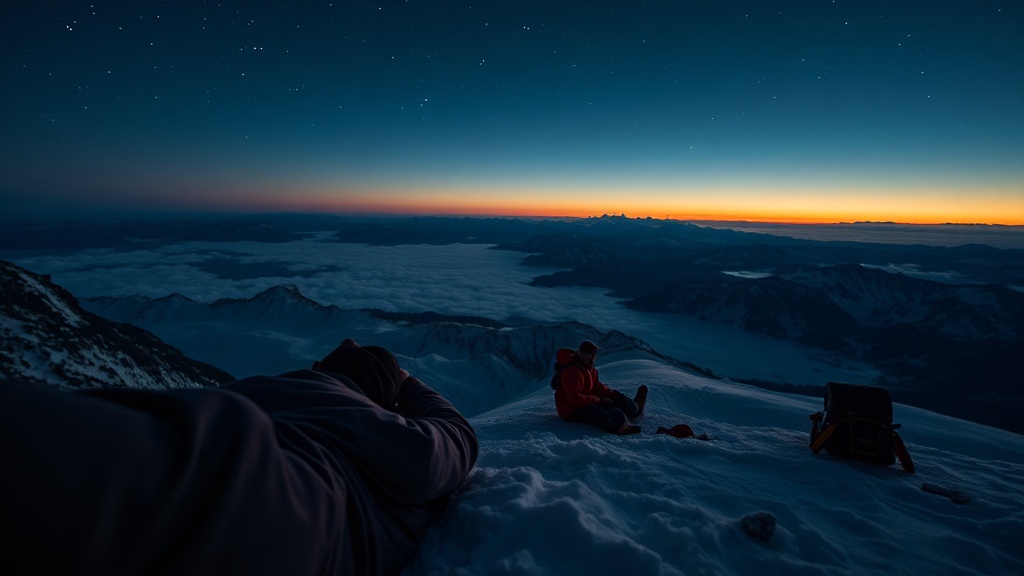
Getting a Full Night's Sleep at Eleven Thousand Feet
Why does sleep feel impossible at high altitudes?
Have you ever spent a night in the high country feeling like your heart was trying to kick its way out of your chest? It is a common frustration for anyone who spends time above the tree line. You finish a long day of hiking, crawl into your sleeping bag with every intention of passing out, and then... nothing. You stare at the roof of your tent while your breathing gets weird and your brain refuses to shut down. This guide covers the physiological reasons why your body rejects rest in thin air and provides a practical blueprint for managing your nightly recovery. Sleep is the most important tool in your kit—without it, your decision-making suffers and your physical performance drops off a cliff.
When you leave my home base in San Diego and head up into the Sierras, your body goes through a massive shift. The primary culprit is the drop in barometric pressure, which means there is less oxygen available with every breath. This leads to a phenomenon known as periodic breathing, or Cheyne-Stokes respiration. Basically, your brain gets confused. It senses low oxygen and tells you to breathe faster. Then it senses low carbon dioxide and tells you to stop breathing altogether for a few seconds. You wake up gasping, your heart rate spikes, and the cycle starts all over again. It is not just in your head; it is a mechanical failure of your body's internal thermostat. Understanding this is the first step toward fixing it.
What can you do to fix a broken sleep cycle?
The most effective way to combat altitude-related insomnia starts hours before you actually lie down. Hydration is vital, but it is a double-edged sword. You need the fluids to help your blood carry oxygen more effectively, but if you drink two liters of water right before bed, you will be crawling out of your tent every ninety minutes to pee. That ruins your sleep quality just as much as the thin air does. I suggest front-loading your hydration. Drink heavily during the day and early evening, then taper off about two hours before you plan to sleep. This gives your kidneys time to process everything while you are still upright and awake.
Food choices also play a major role in how well you rest. While many hikers swear by heavy fats and proteins for long-burn energy, your body actually finds it much easier to metabolize carbohydrates at high altitudes. Digesting a massive steak requires a lot of oxygen—oxygen that your brain and muscles desperately need for recovery. Stick to complex carbs for dinner. Think pasta, rice, or dehydrated meals that focus on grains. This provides a steady supply of glucose without taxing your respiratory system too hard. Plus, a full stomach of carbs can help trigger the release of serotonin, which makes falling asleep a bit easier.
Temperature management is another area where people often mess up. If you are too hot, your heart rate stays high as your body tries to cool itself down. If you are too cold, you shiver, which is an active physical exercise. Finding that sweet spot is key. I am opinionated about sleeping pads—I think people underestimate them. Your pad is not just for comfort; it is your primary barrier against the frozen ground. Look for a pad with a high R-value (at least 4.0 for alpine environments) to ensure you aren't losing all your body heat to the earth. A cold back is a surefire way to stay awake all night.
The Role of Gear in Recovery
Your sleep system should be viewed as a single unit, not just a bag and a pad. For instance, the pillow situation is often overlooked. Many hikers use an inflatable pillow, which I personally find to be a loud, bouncy mess. They often slide around on the pad, forcing you to wake up and adjust them constantly. I prefer stuffing a down jacket into a soft dry bag or using a hybrid pillow with a foam topper. It provides a more stable base for your neck, which can help keep your airway open. Small adjustments like this can significantly improve your chances of reaching deep sleep cycles.
| Temperature (F) | Recommended R-Value | Bag Rating (F) |
|---|---|---|
| 40° and above | 2.0 - 3.0 | 30° |
| 20° to 40° | 3.0 - 4.5 | 15° |
| Below 20° | 5.0+ | 0° or lower |
As you can see from the table above, the gear you choose must match the environment. Using a 30-degree bag in 15-degree weather is a recipe for a miserable, wakeful night. Your body will spend all its energy trying to stay warm rather than repairing muscle tissue. If you find yourself under-gunned, wearing your puffy jacket inside the bag can help, but make sure you aren't so compressed that you restrict blood flow. Restricted blood flow means less oxygen to your extremities, which makes you feel even colder.
Are sleep aids a safe bet in the mountains?
This is where things get controversial. A lot of people reach for over-the-counter sleep aids or even prescription meds like Ambien when they can't sleep at altitude. I am very cautious about this. Most traditional sedatives are respiratory depressants. They tell your body to breathe less, which is exactly the opposite of what you need when oxygen is scarce. Using these can actually worsen periodic breathing and leave you feeling like a zombie the next morning. If you must use something, many mountaineers prefer acetazolamide (Diamox), which is a prescription medication that helps your body acclimate faster and stabilizes your breathing patterns during sleep. It isn't a sleeping pill, but it fixes the underlying cause of the wakefulness. You can read more about the clinical studies on this at the